
Tag: Etsy Seller Tips

  • Why Etsy Products with High Demand Still Lose Money

    Why Etsy Products with High Demand Still Lose Money

    If you sell on Etsy long enough, you eventually hit a confusing wall.

    • Your product has demand.
    • People are searching for it.
    • Your listings are getting clicks.
    • Orders keep coming in.

    Yet profit keeps shrinking.

    Sometimes it erodes slowly. Sometimes it vanishes fast. What makes this especially frustrating is that most advice tells you to double down on the very signals causing the problem.

    More demand should mean more opportunity. On Etsy, that assumption regularly fails.

    Demand is not the problem.

    Why High-Demand Products on Etsy Often Lose Money

    At first glance, high demand looks like safety. It feels like validation that you picked the right product.
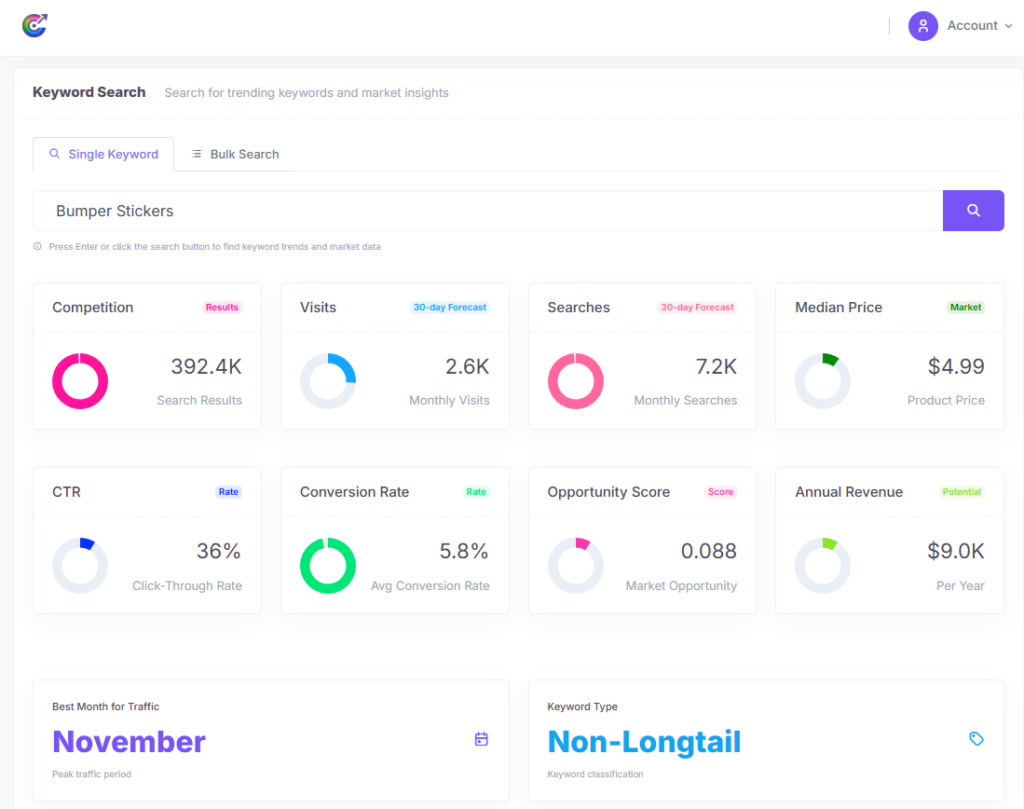
    “Bumper stickers” look like a safe bet. High competition, low prices, and thin margins make it risky once real costs are applied.

    In practice, high demand often signals that profit pressure is already building or about to arrive. When many sellers chase the same product idea, demand does not scale evenly across them. Competition scales faster.

    This is why sellers can be “busy” without being profitable. Volume masks structural weakness until margins are gone.

    Understanding this requires separating activity from economics.

    Why “High Demand” Is a Misleading Signal on Etsy

    High demand is misleading because it is public.

    Etsy surfaces popular searches to everyone. Keyword tools highlight the same terms. Social platforms amplify the same product categories. Sellers do not discover demand gradually. They discover it simultaneously.
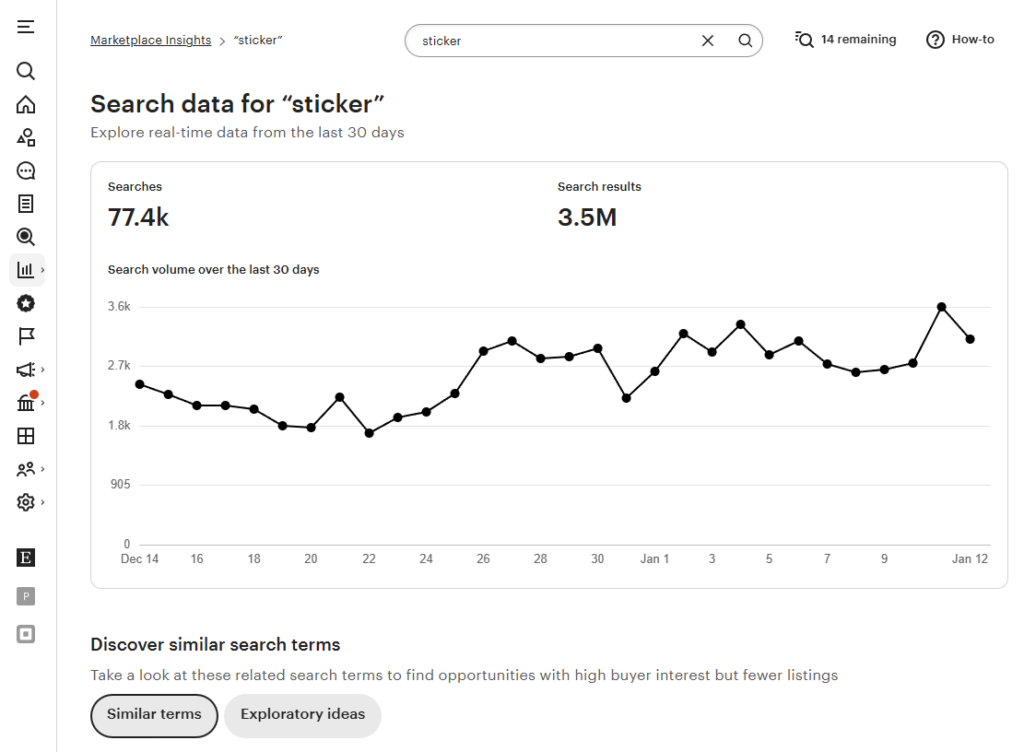
    When a keyword spikes, thousands of sellers react within days. Listings flood in almost immediately.

    Buyers do not arrive at that pace. Sellers do.

    High demand attracts sellers faster than it attracts buyers. That imbalance is where profit starts to break down.

    You can see this clearly in categories like wall art, apparel, wedding items, or personalized gifts. A phrase gains traction and suddenly page one looks like the same product repeated with minor variations.

    Demand exists, but ownership of that demand becomes fragmented.

    In CraftyTrendy’s market data, this pattern shows up repeatedly. In accessories and apparel, products with 30,000–80,000 monthly searches often sit in markets with tens of millions of competing listings. In several of those categories, margins are already in single digits or negative before demand slows.

    How Competition Density Destroys Profit Margins

    What actually determines profit is competition density.

    Competition density is how many sellers are reacting to the same demand signal at the same time.

    As density increases, a predictable chain reaction follows.

    • Listings crowd the keyword.
    • Everyone optimizes around identical phrasing.
    • Products become visually and functionally interchangeable.
    • Price becomes the primary lever.

    At that point, differentiation collapses. Even strong branding struggles when buyers are scrolling through dozens of near-identical options.

    Margins compress before sales slow down. Sellers often miss this because orders are still coming in and dashboards still look “healthy.”

    For example, in pet accessories and travel accessories, we see products with steady sales volume still producing negative margins once fulfillment, fees, and ads are applied. Sales continue, but profitability collapses under competition density.

    Why Sales Can Stay Strong While Profit Disappears

    This is where many sellers get misled by their own data.

    Sales volume is a lagging indicator. Margin erosion happens first.

    When competition intensifies, sellers defend visibility in subtle ways. Prices drop slightly. Ad spend increases to hold position. Promotions become more frequent.

    In multiple categories, revenue remains stable while net profit drops sharply, confirming that sales activity lags margin erosion in crowded markets.

    Etsy fees scale with revenue. Ads compound quietly. Fulfillment and packaging costs rise with volume.

    From the surface, the shop looks active. Traffic is steady. Orders keep coming in.

    Underneath, each sale contributes less profit than before. By the time sales decline, margins have already been thin for a long time.

    The Most Common Reasons Etsy Sellers Misdiagnose Profit Problems

    When profit drops, sellers look for fixes they can control.

    • They assume pricing is wrong.
    • They blame SEO.
    • They chase more traffic.
    • They refresh listings repeatedly.

    These actions are logical, but they treat symptoms, not causes.

    The real issue is not execution. It is competing inside an overcrowded signal space where hundreds of sellers are responding to the same demand indicator at the same time.

    Optimizing harder inside a saturated market rarely restores margin. It usually just keeps you afloat a little longer.

    How to Rethink Opportunity on Etsy

    Fixing this requires a mindset shift, not another tactic.

    Opportunity is not where demand is loud.
    Opportunity is where seller reaction is slow.

    Quiet demand sustains margin because fewer sellers rush in at once. Buyers in those spaces have fewer interchangeable options, which stabilizes pricing.

    This reframing changes how you evaluate products.

    Instead of asking how many people are searching, you ask how many sellers are responding. Instead of chasing volume, you prioritize margin. Instead of broad reach, you lean into specificity.

    This is why many long-term profitable Etsy shops do not sell trendy products. They sell narrowly defined items with consistent demand and limited competition.

    What to Look for Instead of Demand Spikes

    You do not need explosive demand to build a profitable Etsy shop. In many cases, explosive demand works against you.

    Healthier signals look quieter.

    • Mid-level demand that stays steady over time rather than spiking suddenly.
    • Search results with visual and functional variety instead of near clones.
    • Stable pricing bands rather than constant undercutting.
    • Products that are not circulating heavily on social platforms.

    For example, instead of chasing the most searched wall art phrase of the month, a seller might focus on a very specific style, subject, or buyer use case that sells consistently without drawing mass attention.

    Why Low-Hype, Stable Products Often Perform Better

    Low-hype products benefit from slower seller reaction.

    When a product does not trend on social media, fewer sellers rush in. When keywords do not spike dramatically, competition builds slowly instead of all at once.

    That creates room to refine the product, improve presentation, collect reviews, and hold pricing without constant pressure.

    Many profitable Etsy sellers operate in these quieter spaces. They do not dominate search charts. They dominate small segments that compound over time.

    This stability helps shops survive algorithm shifts, fee changes, and trend cycles.

    How This Changes the Way You Do Etsy Product Research

    Once you understand competition density, product research stops being about chasing numbers and starts being about observing behavior.

    You watch how fast listings appear, not just how many searches exist.

    You track price movement, not just sales count.
    You look for gaps in personalization, use cases, or positioning rather than broader demand.

    This approach does not remove risk, but it dramatically reduces the chance of entering a market that is already racing to the bottom.

    Seeing competition density before you enter a market is hard to do manually. CraftyTrendy is built to surface how crowded a signal really is—before margins disappear.

    The One Question That Predicts Profit on Etsy

    Most sellers ask the wrong question.

    They ask how big demand is.

    A better question cuts through noise and hype.

    How many other sellers are reacting to the same signal right now?

    That single question changes how you evaluate products, keywords, and opportunities on Etsy.

  • Etsy Tests New Ad “Strategies” But at a Price Sellers Aren’t Happy About

    Etsy Tests New Ad “Strategies” But at a Price Sellers Aren’t Happy About

    Etsy is quietly rolling out a new beta feature for its advertising platform, giving sellers the option to choose between three “ad strategies.” But there’s a catch: you’ll need to raise your daily ad budget to at least $25/day just to access them.

    For many small shops, that’s a big jump—$750 a month on ads—before you even see whether the feature delivers on its promises.

    What’s Changing in Etsy Ads

    Traditionally, Etsy ads have run on a ‘set it and forget it’ basis, with sellers simply choosing their daily budget and letting Etsy’s algorithm do the work.

    But in 2025, staying on top of changes like this is key to growth in the handmade eCommerce space—as we covered in our 2025 handmade trend report.

    When enabled, sellers can choose between:

    Increase Orders

    Etsy will push ads into more competitive placements to maximize visibility and sales. The tradeoff? Higher cost per order.

    Best For

    Jumpstarting orders, competitive categories, and seasonal pushes.

    Balance Orders With Returns (default)

    Etsy balances ad spend, orders, and ROI in an attempt to keep things steady.

    Best For

    Consistent growth and predictable spending.

    Increase Return

    Etsy will bid more conservatively, reducing ad spend and aiming for better ROI. The downside is fewer orders and lower visibility.

    Best for

    Sellers prioritizing lower costs or working in less competitive niches.

    Why Sellers Are Frustrated

    On the surface, these options give sellers the appearance of more control. In reality, it’s simply three versions of the same black-box system—spend more, spend the same, or spend less—with no real insight into how Etsy is making decisions behind the scenes.

    The biggest frustration? The $25/day minimum budget to unlock these strategies.

    For serious shops already spending heavily, this isn’t shocking. But for the majority of sellers—especially those experimenting with ads at $3–10/day—this new paywall is discouraging.

    And if you’re in categories where margins are already slim, like many of the profitable handmade products we highlighted for 2025, that extra $750 a month in ad spend can feel impossible to justify.

    As one seller put it, it feels like Etsy has introduced “a button to make ads more expensive.”

    What This Means for Your Shop

    If you’re not currently running ads, nothing changes—your shop will continue under the ‘balanced’ strategy by default.

    But if you’re still in the early stages of building traction, it may make more sense to focus on organic growth or even branch out to other platforms. There are plenty of alternative marketplaces for handmade sellers where you can test products without locking yourself into a steep ad budget.

    If you’ve been considering ads or testing them at lower spend levels, here’s what to keep in mind:

    • Don’t run ads on a brand-new shop. Without proven organic sales, you’ll likely waste money.
    • Test only when you have consistent daily sales. Ads work best once Etsy already knows your audience and what products sell.
    • Budget for a full month. Ads need at least 30 days of consistent spend to give meaningful results. If you only run $2/day and run out of budget in 90 minutes, you’ll never get usable data.
    • Match strategy to your goals. Want a seasonal sales push? “Increase Orders” might make sense. Trying to keep costs lean? “Increase Return” could be worth testing. But don’t expect miracles.

    The Bottom Line

    Etsy’s new ad strategies are less about giving sellers true control and more about nudging higher ad budgets. While the options may help certain shops fine-tune their approach, most sellers will find little difference beyond how quickly their budget drains.

    Until Etsy provides more transparency, ads remain what they’ve always been: a gamble. Whether that gamble pays off depends far more on the strength of your products and listings than on which ad “strategy” you click.

    At the end of the day, your products and the strength of the handmade industry matter more than Etsy’s latest ad experiment. The industry itself is booming, projected to hit nearly $2 trillion—as we broke down in our 2025 handmade industry report.

  • Etsy’s New AI Search Just Caused a 10x Traffic Surge (Here’s What This Means for You)

    Etsy’s New AI Search Just Caused a 10x Traffic Surge (Here’s What This Means for You)

    Etsy’s been quietly rolling out major upgrades to how search works on the platform—and the results are making noise. The latest Etsy AI Search Update triggered a 10X traffic increase, reshaping how buyers discover handmade goods. That’s not just a boost. It’s a marketplace transformation.

    Let’s walk through what changed, why it matters for handmade sellers, and what you can do to stay ahead.

    What Is the Etsy AI Search Update?

    From 2019 to 2024, Etsy’s revenue surged from $818 million to $2.81 billion. This impressive growth reflects the company’s significant investments in AI, machine learning, and technological infrastructure. In 2023 alone, Etsy allocated over $470 million to research and development, underscoring its commitment to enhancing the platform’s capabilities.

    Etsy Revenue Growth (2019–2024)
    2019
    $818M
    2020
    $1.73B
    2021
    $2.33B
    2022
    $2.57B
    2023
    $2.75B
    2024
    $2.81B

    The core goal? Smarter, more accurate product discovery. Etsy’s upgraded AI tools are now front and center in marketplace performance. The Etsy AI Search Update helps match buyers to listings with more precision—even when their searches are vague.

    And it’s working. About 95% of purchases now come from the first page of search results, up from 85%. That means the visibility stakes for sellers just got higher.

    Learn more about the State of Craft & Handmade eCommerce in 2025

    How Cloud Migration Supercharged Etsy’s Search Engine

    Etsy began moving its data to Google Cloud back in 2018. The shift included 5.5 petabytes of data (think: 40 billion photos) and allowed Etsy to ditch its aging on-premise servers.

    Why it matters:

    • 💡 15% of Etsy’s engineers were freed up to focus on new features
    • ⚙️ Experimentation speed jumped 115%
    • 🕒 Data processing timelines dropped from weeks to days
    • 💸 Computing costs were cut by 42%
    • 🌱 Energy usage dropped—helping Etsy hit its sustainability targets

    This back-end shift laid the groundwork for the Etsy AI Search Update to succeed, giving machine learning tools the power to scale and evolve.

    Key Changes from the Etsy AI Search Update

    Etsy’s new AI search goes far beyond simple keyword matching. It now learns from:

    • Browsing behavior
    • Image analysis
    • Shipping speed and cost
    • Listing quality and responsiveness

    One big innovation is Etsy’s use of “algotorial” collections—curated groups of products chosen by human experts and expanded with AI tools. These collections keep Etsy’s handmade feel while offering scalable, personalized discovery.

    Shoppers now get custom homepages, curated collections like “Island Luxe” or “Literary Girl,” and smarter recommendations based on their behavior. It’s turning Etsy from a search-first platform into a discovery-first one.

    How This Update Affects Your Listings

    Etsy’s smarter AI tools have raised the bar—but also opened up more opportunity.

    Here’s what top-performing shops are doing differently:

    • Optimizing listings with high-performing keywords
    • Using standout, high-quality photos with popular color trends on Etsy
    • Offering free shipping
    • Responding quickly to customer messages
    • Maintaining excellent reviews and fulfillment metrics

    Shops using AI-assisted tools (for writing, keyword research, and listing analysis) are seeing serious gains—up to:

    • 47% more visibility
    • 31% higher sales
    • 15 hours saved per week on admin tasks

    What Etsy Sellers Need to Know About New AI Policies

    With Etsy’s AI rollout, transparency is more important than ever.

    • If you use AI to help create your product, you need to disclose it.
    • Etsy is removing listings that violate its Handmade Policy at 4x the rate compared to last year.
    • Selling AI prompt bundles? That’s not allowed on the platform.

    Bottom line: Stay honest, stay original, and use AI to assist—not replace—your creative process.

    How to Win With Etsy’s AI Search in 2025

    The Etsy search algorithm is smarter. The platform is faster. And competition is tighter. But sellers who adapt are already seeing the rewards.

    Here’s your to-do list:

    • Optimize titles and tags for relevant, high-traffic keywords
    • Upgrade your photos—they matter more than ever
    • Keep your shipping affordable and transparent
    • Use AI tools to streamline listing improvements and Etsy SEO
    • Stay compliant with Etsy’s updated policies

    This is Etsy’s biggest tech leap in years—and it’s just the beginning. With over $470 million poured into AI development, we can expect even more personalized, predictive, and powerful tools ahead.

    And for sellers who embrace the change while staying true to what makes their shop special, the future looks very bright.